


The history of technological breakthroughs offers valuable perspective on today's artificial intelligence developments. In the 1940s and early 1950s, computing relied on massive, power-hungry vacuum tubes housed in building-sized machines. A notable IBM executive allegedly predicted a global demand for just "five computers." The semiconductor revolution of the mid-1950s changed everything, introducing smaller, more efficient components that catalyzed the modern digital age.
Fast forward to 2025, and we're witnessing a potentially similar paradigm shift in AI technology. Recent developments from DeepSeek, a Chinese AI firm, suggest a dramatic reduction in the resources needed to develop advanced AI systems. Their breakthrough reportedly allows for building sophisticated AI models at just 3-5% of current costs, comparable to how semiconductors transformed early computing.
How might this reshape the technology landscape?
This advancement could mark another pivotal moment in AI development, following the "ChatGPT moment" of late 2022. DeepSeek's published research indicates a revolutionary approach that could slash AI development costs by 95-97%.
Such efficiency gains could democratize access to advanced AI capabilities while reducing the substantial infrastructure investments currently required. This has prompted market concerns about potential reduced demand for data centers, computing power, and energy resources.
Financial markets responded swiftly to this news on January 27, with technology stocks experiencing significant declines - the Nasdaq fell 3.1% while the S&P 500 dropped 1.5%. To understand the broader implications, consider these three key perspectives.
Technology leaders have dominated market performance
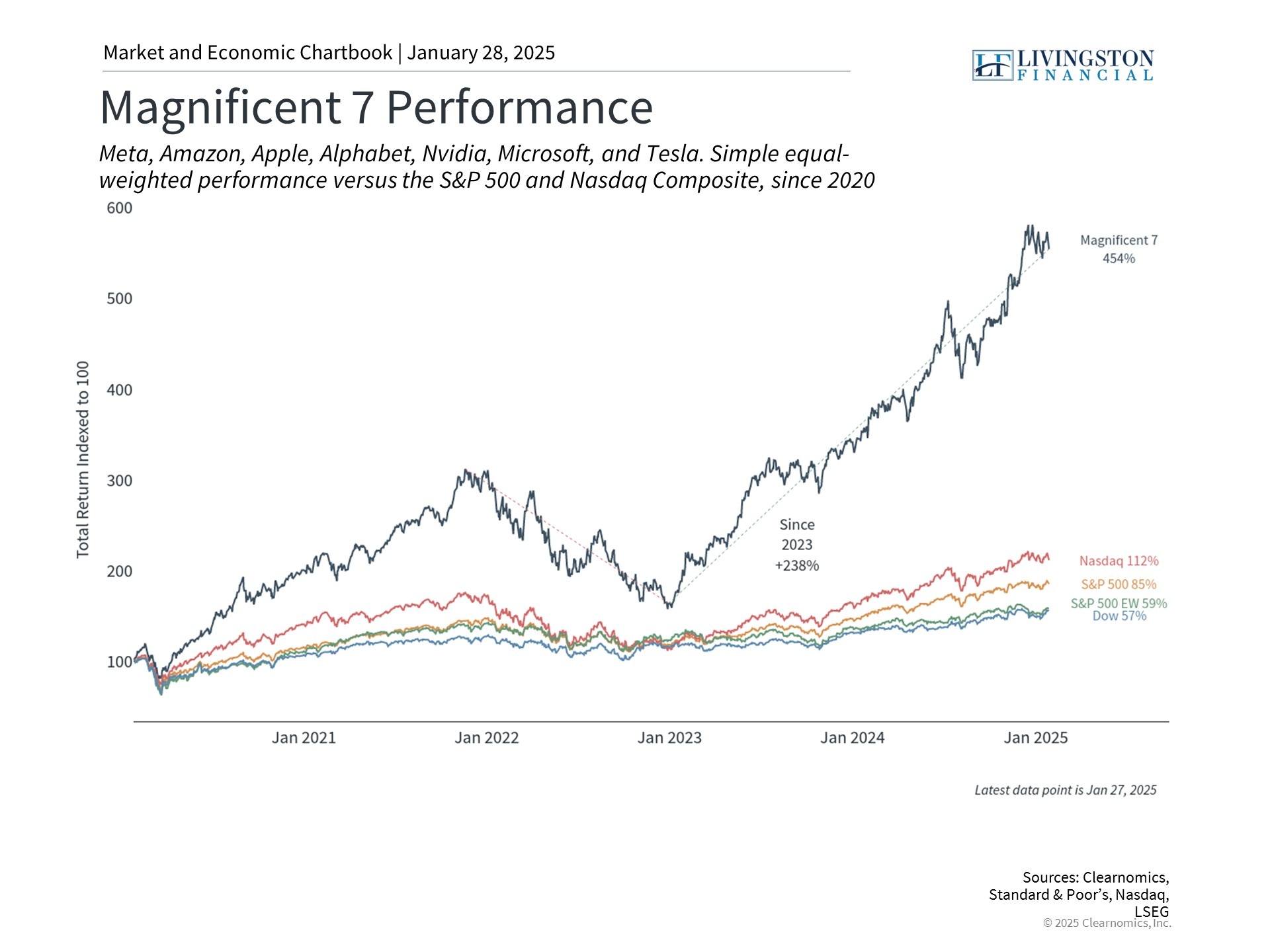
The market's trajectory has been significantly influenced by major technology companies, particularly the Magnificent 7. This concentration has raised questions about market stability and vulnerability to technological disruption.
The market-cap weighted structure of the S&P 500 means individual tech stocks can become disproportionately influential in investment portfolios. This may result in unintended concentration risk for investors.
These market movements highlight the importance of maintaining well-diversified portfolios aligned with long-term financial objectives, preferably with professional guidance, rather than concentrated positions in specific sectors.
Innovation drives economic expansion
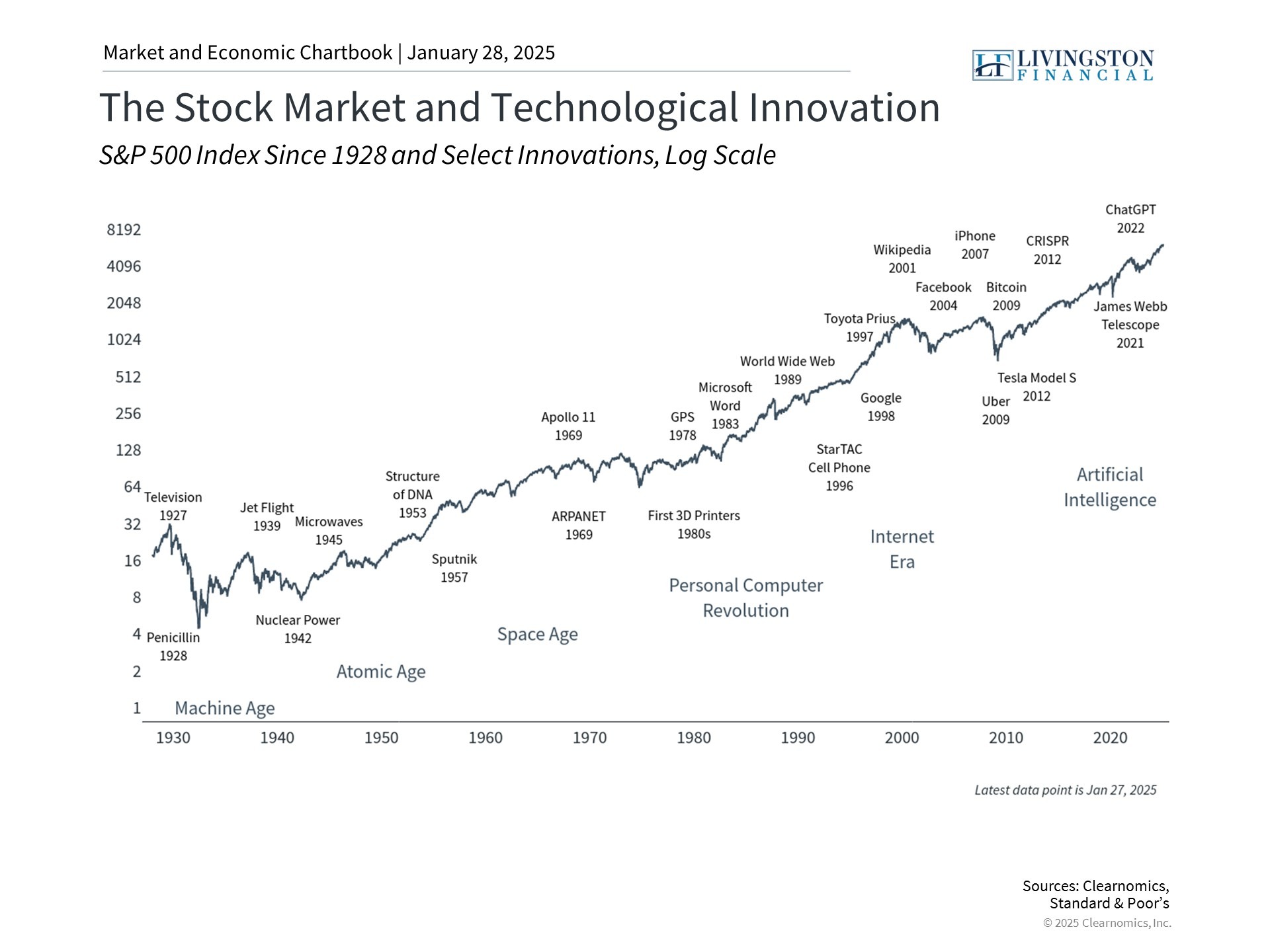
Roy Amara's observation about technology's impact remains relevant: short-term effects are often overestimated while long-term implications are underappreciated. While AI enthusiasm runs high, we're still discovering how this technology will transform our economy.
Current market reactions focus primarily on AI infrastructure providers, while the demand-side potential remains largely unexplored.
The Jevons Paradox suggests that improved efficiency often leads to increased resource consumption. Just as semiconductor efficiency led to widespread computing adoption, more efficient AI models might actually expand computing demands through new applications.
Market valuations approach historical peaks
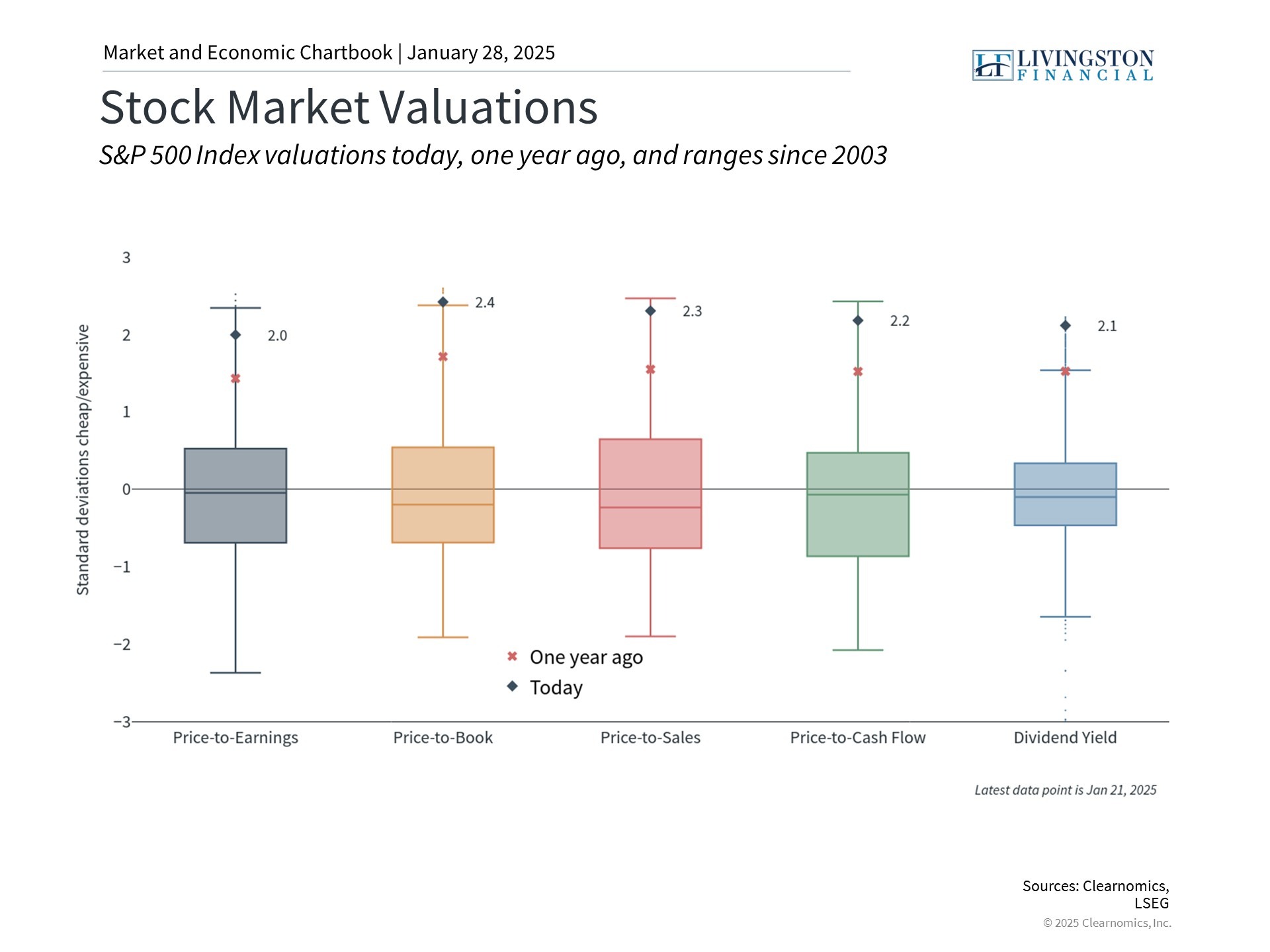
Current market valuations, particularly in the AI sector, are reaching levels reminiscent of the dot-com era. These "priced to perfection" valuations reflect highly optimistic growth expectations, making stocks sensitive to any shifts in outlook.
While valuations alone don't predict near-term market movements and can remain elevated during bull markets, they're crucial for portfolio allocation decisions.
Success in this environment requires a balanced investment approach that encompasses various sectors and asset classes, enabling investors to participate in technological advancement while managing volatility.
The bottom line? Revolutionary technologies create enduring value despite short-term market volatility, emphasizing the need for disciplined, long-term investment strategies.